


Understanding the changes in the womb during labour
Research institute:
Chelsea & Westminster Hospital,
Imperial College, LondonProject dates:
Grant Awarded: 30 Sep 2020
Funding awarded:
Grant Amount: £54,750
To find ways to prevent preterm birth, we need to better understand how normal full-term labour begins. As part of BUMP, Dr Brendan Browne has generated rich data from tissue samples taken from various locations within the womb, donated by women with low-risk full-term pregnancies. His research will contribute to our knowledge of how labour starts, which will help find ways to prevent babies from being born too soon.
The challenge
Despite decades of research, we still don’t have a complete picture of how normal full-term labour starts. This is hampering our ability to understand what goes wrong when labour starts too soon. Without understanding full-term labour, we won’t be able to find ways to prevent all preterm births.
The project
The Borne Uterine Mapping Project (BUMP) aims to create a map of what is happening in the womb during labour. As part of this project, Borne funded the clinical research fellowship (a PhD degree for medical doctors) of Dr Brendan Browne.
During his project, Dr Browne collected samples donated by three groups of eight women with healthy low-risk pregnancies: one group not in labour, one in early labour, and one in established labour. The samples were collected from inside their womb after caesarean section delivery of their baby.
He collected samples of two key tissues involved in labour: the myometrium (muscle that contracts the womb) from three different locations, and the decidua (the inner lining of the womb) from two locations. Having a range of locations is important as different regions of the womb have different jobs during pregnancy and labour.
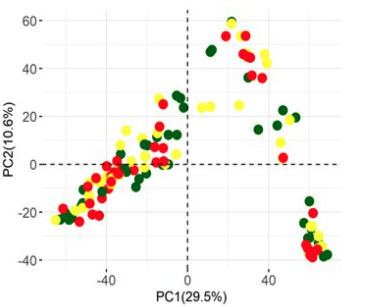
Dr Browne then analysed these samples to generate data of the activity of more than 45,000 different genes, and the quantity of over 6,000 different proteins.
This data will provide scientists with a detailed picture of what is going on in these two tissues at different locations, at different stages of labour.
What difference will this project make?
Dr Brendan Browne’s research provides rich data on two key tissues from different locations in the womb, donated by women with low-risk pregnancies at various stages of labour. This can help to provide a picture of how ‘normal’ labour starts.
Along with the data generated in BUMP, Dr Browne’s research will help scientists better understand the process of labour, and what is going wrong when labour starts too soon. This could lead to more effective treatments to prevent preterm birth, and other pregnancy complications.
Nurturing Talent
One of Borne’s key objectives is to support the UK’s preterm birth research community. One way we do this is by funding PhD studentships of medical doctors, known as Clinical Research Fellowships. The aim is to get more medics involved in preterm birth research, and strengthen the link between research and clinical practice. This will help speed up discoveries that will stop babies being born too soon.
Borne funded the Clinical Research Fellowship of Dr Brendan Browne under the supervision of Prof Mark Johnson. Dr Browne explains what this PhD studentship means to him:
“This PhD has changed my life completely. When I started this project, I was very research-naïve, but I’m grateful that Mark and my colleagues took a chance of me – now I’ve come to the end of my PhD, I would do it all again in a heartbeat. Borne have been incredibly supportive throughout, and the biggest advocate of my work. I’ve learnt so many transferable skills during my PhD, but it has also opened up how I see the world, and how I think about medicine. Most important are the women who agreed to take part, who made this research possible, and I remember every single one of them.”
Dr Browne’s Clinical Research Fellowship is an essential requirement for his plans to sub-specialise in maternal medicine, specifically preterm birth and other pregnancy complications. In the future, he hopes to create a role for himself that blends both clinical medicine and research, and Borne’s funding has been an important step on that path.


